

Diego arrived early, not out of excitement, but so he could quietly observe the room before anyone noticed him. Arriving early meant fewer eyes on him. It meant finding a wall to stand besides, a drink to hold, and a reason to look occupied.
How do I even start a conversation with someone who could be twice my age? he wondered.
“Hi there. Is this your first networking event?”
Diego turned around, slightly startled.
“Yes, actually,” he replied with a nervous smile. “I’m Diego.”
“Nice to meet you, Diego. I’m Joanna.”
Just like that, the conversation began.
For many young adults, moments like these can feel intimidating. While technology has made it easier than ever to communicate digitally, it has also changed the way we build relationships in person. Many people feel more comfortable sending a text or email than introducing themselves to a stranger, answering a phone call, or attending a networking event.
At the same time, the job market has become increasingly competitive. Artificial intelligence has made the hiring process more efficient for employers by allowing companies to quickly screen hundreds of applications. For job seekers, however, this often means competing against automated systems before a recruiter ever reviews their résumé. It’s no surprise that many qualified candidates find themselves facing rejection after rejection.
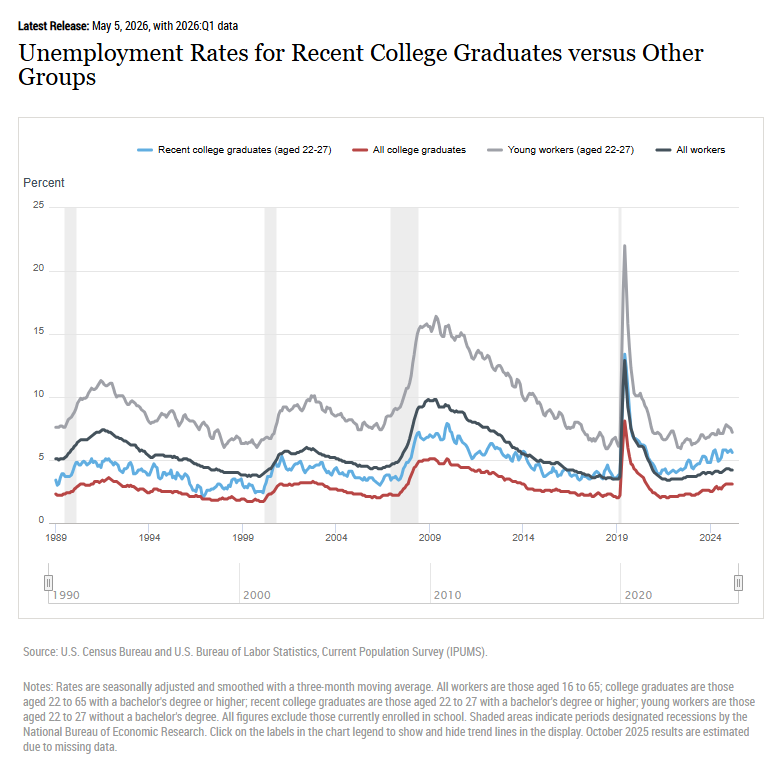
Social media has also shaped the perception that recent college graduates are facing overwhelming unemployment. While many graduates do experience challenges entering the workforce, the data tells a more nuanced story. According to the Federal Reserve Bank of New York, the unemployment rate for recent college graduates is approximately 5.6%. The question isn’t simply whether jobs exist, but it’s how candidates can stand out from the thousands of others applying for them.
One answer is networking.
Today, earning a college degree has become increasingly common. Employers are still looking for education, but they are also searching for experience, initiative, and strong professional relationships. That creates a frustrating cycle for many young professionals: entry-level positions often ask for three to five years of experience, leaving graduates wondering where they’re supposed to begin.
Networking helps bridge that gap.
Networking doesn’t always happen in conference rooms or large professional events. It can happen over lunch with a mentor, during a volunteer opportunity, after a community event, or through a simple introduction from a mutual connection. Every genuine conversation has the potential to open a door. Exchanging contact information and maintaining those relationships can create opportunities that online applications alone often cannot.
The most successful networking isn’t about collecting the most business cards or talking to every person in the room. It’s about building authentic relationships. Business owners and hiring managers are constantly looking for people who can solve problems, contribute ideas, and bring value to their organizations.
Listening carefully, asking thoughtful questions, and understanding someone else’s challenges can make a lasting impression. People may not remember who gave the firmest handshake, but they often remember the person who offered a fresh perspective or helped them think differently about a problem they had been trying to solve.
In 2018, author David Burkus delivered a TED Talk that challenged traditional ideas about networking by emphasizing the importance of building meaningful relationships rather than simply making connections. His message reminds us that networking is less about self-promotion and more about creating value for others.